
Adapt Team
Use cases
Getting started
Upload one file and get a finished QBR deck back

The problem: the gap between signup and valueWhat Adapt doesTime to first value, measured properlyWhat you need connectedWhy this is different from asking a chatbot about a spreadsheetFAQCan I use an AI coworker without connecting any integrations?How large a file can I upload?Can AI build a slide deck, not just analysis?Does the data need cleaning first?What is the fastest way to evaluate an AI tool on my own data?
Most AI tools ask you to connect something before they can do anything. That is a reasonable request and a terrible first experience. You want to know whether the thing is any good, and the thing wants OAuth scopes for your CRM.
So here is the version with no setup at all. You have a raw export sitting on your laptop. Sixty thousand rows of shipment data, or subscription data, or ticket data. You drag it in, say what you need, and get analysis and a finished deck back. Nothing connected, nothing configured, no admin approval.
This is the fastest way to find out whether an AI coworker is useful on your actual data rather than on a demo dataset.
The problem: the gap between signup and value
The reason most AI pilots stall is not that the product is bad. It is that nothing happens in the first session.
- Setup comes before value. Connect your tools, invite your team, configure permissions, then maybe see something useful. Every step is a place to drop off.
- Integrations need someone else. Connecting a CRM or a warehouse often needs an admin, which turns a ten-minute evaluation into a two-week ticket.
- Sample data proves nothing. A demo on someone else's dataset tells you the product works. It does not tell you it works on the mess you actually have.
- The real first task is usually a file. In practice, the thing on someone's plate is a spreadsheet somebody sent them and a deck due Thursday.
What Adapt does
The whole workflow is two steps: upload, then ask.
- Take the raw file as it is. A large CSV export straight out of an operational system. Dozens of columns, inconsistent formatting, more rows than a spreadsheet will comfortably open. No cleanup first.
- Understand the shape of it. The agent reads the columns and works out what it is holding: shipments, revenue, margin, claims, exceptions, and who owns what.
- Do the actual analysis. Not a summary of the file. Performance by business unit, revenue and margin by mode, claims exposure, workload distribution, and where the process is breaking down.
- Build the deck. It fills a branded template section by section, so the output is something you can present rather than a wall of numbers to reformat.
- Show its work. The figures in the deck trace back to the file, so you can check any of them before you put your name on it.
- Iterate in conversation. Wrong cut, missing section, different quarter. It is a message, not a rebuild.
Because the agent has its own computer, the file never needs to fit in a chat window. It is read, parsed, and analyzed like a real dataset, which is why sixty thousand rows is unremarkable.
Time to first value, measured properly
Another way to frame this: the useful metric for an AI tool is not what it can eventually do once fully deployed. It is what it does in the first ten minutes, before anyone has approved anything.
Uploading a file clears every blocker at once. No admin, no scopes, no security review to schedule, no data leaving a system it was not already leaving when someone emailed you the export. You find out immediately whether the analysis is good.
And it scales into the connected version naturally. The same request, once your systems are connected, stops needing the file at all: the agent pulls the data itself and the deck builds on a schedule. But that is step two, and step two is much easier to argue for once step one has already produced something you used.
What you need connected
Nothing. That is the point of this one.
When you are ready to go further, connecting the source system means the same deck builds itself without the export, and connecting Slack or email means it arrives before you ask.
Why this is different from asking a chatbot about a spreadsheet
A general chatbot with a file upload will read a slice of your file and talk about it. It is working with a sample inside a context window, which is why the numbers drift on large files and why it cannot produce a real artifact at the end.
An agent with a sandbox loads the whole file, runs real analysis over all of it, and writes an actual deck to disk. The difference shows up exactly where it matters: on a large messy export, and at the moment you need a file back rather than a paragraph.
FAQ
Can I use an AI coworker without connecting any integrations?
Yes. Uploading a file is a complete workflow on its own. Connecting systems removes the upload step later and enables scheduled and proactive work, but nothing needs to be connected to get an analysis and a document back on the first try.
How large a file can I upload?
Large operational exports are fine. Because the analysis runs in a sandbox rather than inside a chat context window, tens of thousands of rows and dozens of columns are handled as a normal dataset rather than a truncated sample.
Can AI build a slide deck, not just analysis?
Yes. It can fill an existing branded template so the output matches how your company presents, rather than producing generic slides you then have to restyle.
Does the data need cleaning first?
No. Raw exports with inconsistent formatting and unused columns are the normal input. Cleaning is part of the work rather than a prerequisite for it.
What is the fastest way to evaluate an AI tool on my own data?
Give it the file that is currently on your plate and ask for the output you actually owe someone. If it produces something you would send, that tells you more than any demo on a sample dataset.
Ready to try it on a file of your own? Get a demo with an Adapt engineer.
More use cases
2:58
Marketing5 min read
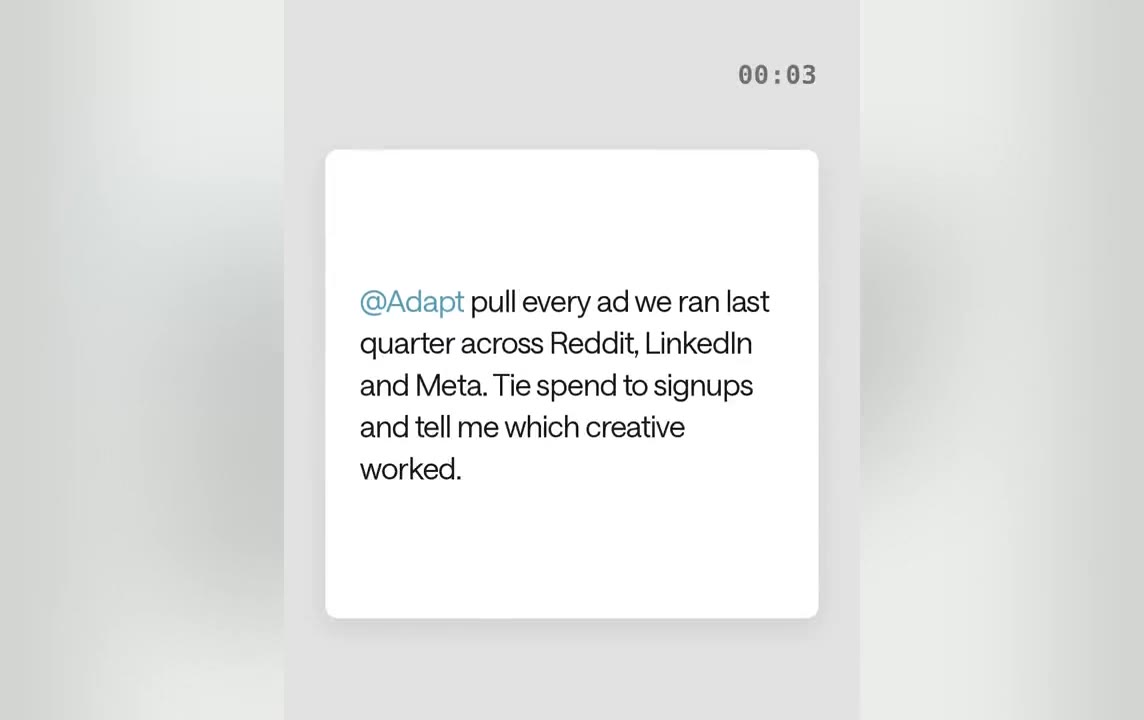
Go from ad idea to finished social video in one thread
A rough concept, a few rounds of feedback, and a rendered social video with real performance data in it. No brief, no agency, no handoff between five tools.
1:47
Customer Success5 min read
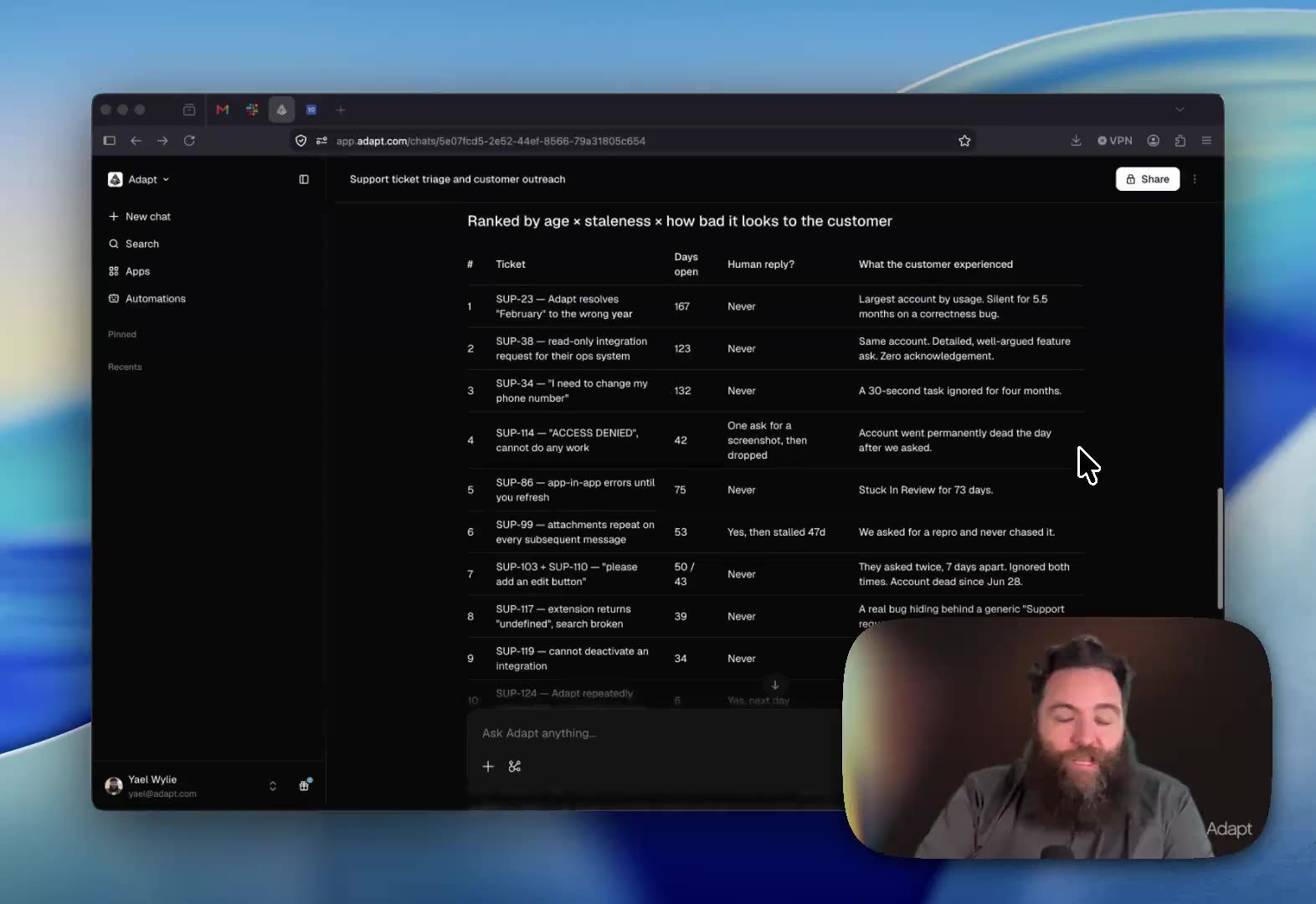
Triage a support queue and find the tickets nobody filed
Your support backlog is only half the problem. The other half is sitting in shared Slack channels as messages nobody answered. Here is how an AI coworker ranks both, and drafts the replies.
1:03
Leadership5 min read
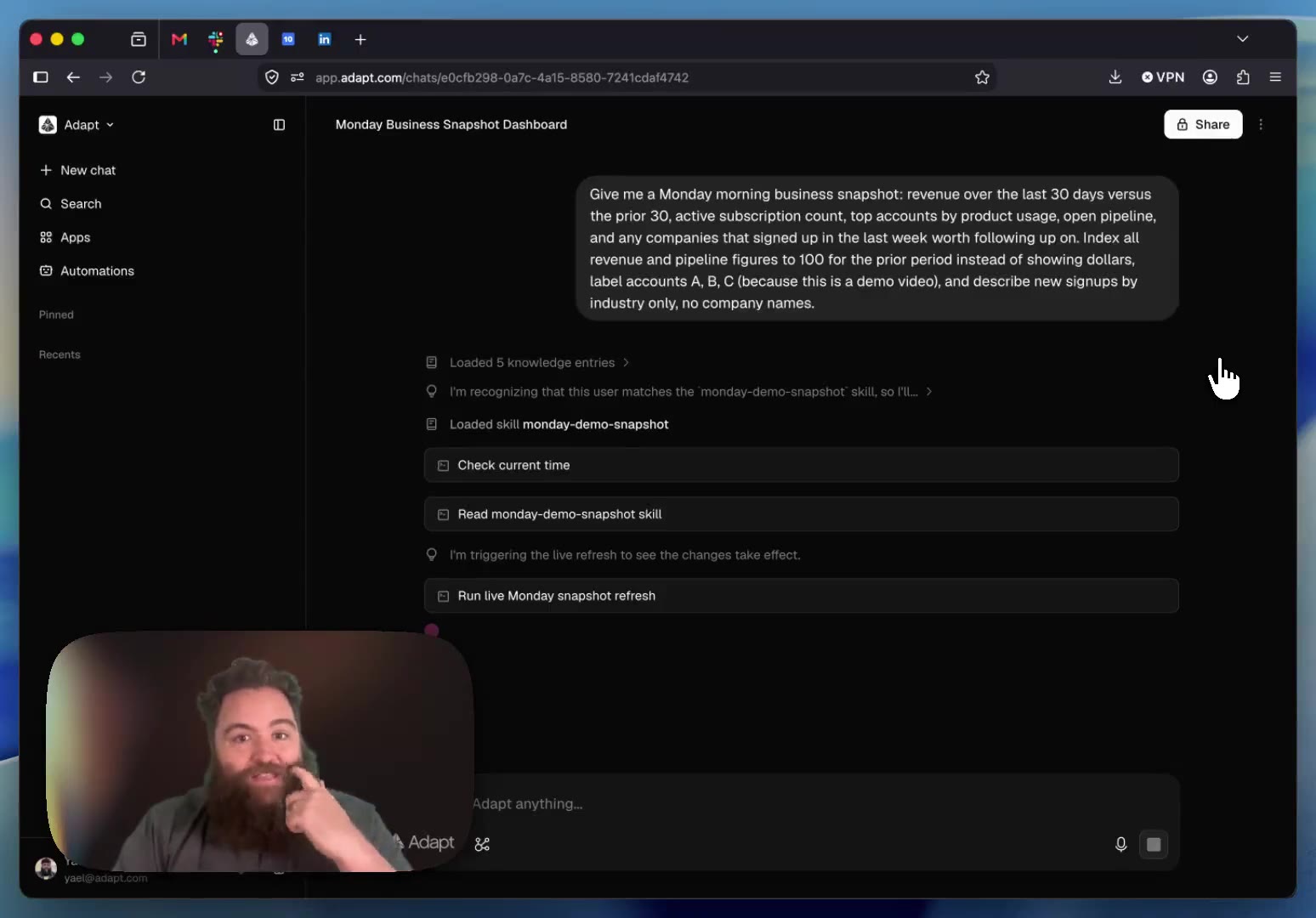
Get a Monday morning business snapshot in one prompt
Revenue, subscriptions, top accounts, open pipeline, and last week's signups. One question on Monday morning instead of five dashboards and a spreadsheet.

Make your company
instantly AI native.
Bring us a priority or workflow. We’ll show you how Adapt can put it to work across your company.