
Adapt Team
Use cases
Customer Success
Triage a support queue and find the tickets nobody filed

The problem: your backlog is not your workloadWhat Adapt doesSupport triage without the swivel chairWhat you need connectedWhy this is hard without an AI coworkerFAQHow do you prioritize a support backlog?Can AI find customer issues that were never filed as tickets?Will an AI agent reply to customers automatically?How does an AI agent know which accounts matter most?Which support tools does this work with?
Every support queue has a number on it. Twenty-four open tickets, say. That number is comforting and slightly false, because it describes the work that made it into the tracker, not the work customers are actually waiting on.
The tickets you can see are the easy part. The hard part is the customer who asked a question in a shared Slack channel eleven days ago, never got an answer, and never filed anything. That conversation is not in your backlog. It is not in your metrics. It is, quietly, the thing that churns the account.
This use case does both halves at once: rank the real tickets by how bad the wait looks from the customer's side, then go find the requests that never became tickets at all.
The problem: your backlog is not your workload
Ask most customer success or support teams what is in the queue and you get a ticket count. Ask what customers are actually waiting on and the answer gets much fuzzier.
A few things go wrong at the same time:
- The queue is full of things that are not customer issues. Vendor spam, agency outreach, duplicate reports, and hygiene noise all land in the same inbox as real problems. A raw ticket count overstates the work and hides the urgent items inside it.
- Age is not the same as impact. A ticket that has been open 107 days with no human reply is a different animal from one opened yesterday. Sorting by date alone does not tell you which customer feels ignored.
- The worst issues never get filed. Customers on a shared Slack channel do not open tickets. They ask a question, get no answer, and go quiet. Nothing about that shows up in a support dashboard.
- Context lives in five places. To answer well you need the ticket, the thread, the account's usage, and the history of what has already been tried.
The result is a team that works hard on a visible queue while invisible problems compound.
What Adapt does
The prompt in the demo is one paragraph of plain English. No ticket rules, no saved views, no query language:
Pull every open ticket from the SUP team in Linear. Rank them by how long they've been open and how bad the customer experience looks. Additionally, look for Slack Connect messages with customers that have gone unanswered or unresolved, which might never have become tickets but probably should have. For the top 5, find whatever context you can on that account and draft a reply I could send. Don't send anything.
From there Adapt works across systems on its own:
- Pulls the real queue. It reads open tickets out of Linear, including descriptions and comment threads, not just titles.
- Separates signal from noise. In the demo, 24 open tickets sort into 11 genuine customer issues, 8 vendor and agency spam, 4 hygiene items, and 1 ambiguous. The count you act on is less than half the count on the dashboard.
- Ranks by customer experience, not just age. The ranking combines how long a ticket has been open, whether a human ever replied, and what the wait actually looked like from the customer's side.
- Reads the channels nobody is watching. It sweeps shared Slack Connect channels for customer messages that went unanswered and never became tickets, and reports them alongside the tracked queue.
- Enriches each account. It pulls usage data from the warehouse so a stale ticket on a heavily active account gets weighted differently from one on a dormant trial.
- Drafts the replies. For the top items it writes a reply you could actually send, in your voice, using a saved voice guide. Nothing is sent. You review and hit send.
It also flags patterns rather than only instances. In the demo it surfaces three preventable single-seat churns and a root cause worth fixing: real customer messages were being misclassified as spam at intake.
Support triage without the swivel chair
Another way to say the same thing: this is a support workflow that reads every system a customer could have reached you through, then hands back one ranked list and a set of drafts.
The manual version of this is a person with six tabs open on a Monday morning, scrolling Linear, scrolling Slack, checking the warehouse for who matters, and then writing replies from scratch. It takes hours, it happens inconsistently, and the shared-channel sweep is usually the part that gets skipped because it is the most tedious.
What you need connected
- Your ticket tracker. Linear in this demo. Jira, Zendesk, Intercom, and Freshdesk work the same way.
- Slack, including the shared Slack Connect channels where customers talk to you.
- A data source for account context. BigQuery in this demo, or Snowflake, Postgres, or your product analytics.
- A voice guide in knowledge, so drafted replies sound like your team and not like a bot.
Why this is hard without an AI coworker
A ticket tracker can sort by age. It cannot read a Slack channel it is not connected to, and it has no idea which account is worth protecting. A Slack search can find an unanswered message, but only if you already suspect it exists. A dashboard can count tickets, but counting is exactly the thing that misleads you here.
The reason this workflow needs an agent rather than a report is that it crosses systems and then makes a judgment: what is real, what is stale, what looks bad to the customer, and what should be said next. That judgment is the work.
FAQ
How do you prioritize a support backlog?
Rank by customer impact rather than by date alone. Combine how long the request has been open, whether a human has ever replied, how important the account is, and how the wait looks from the customer's perspective. Age on its own puts noise at the top of your list.
Can AI find customer issues that were never filed as tickets?
Yes. Requests that arrive in shared Slack channels, email, or community threads often never become tickets. An AI agent connected to those channels can sweep them for unanswered or unresolved customer messages and report them next to your tracked queue.
Will an AI agent reply to customers automatically?
Only if you ask it to. In this workflow it drafts replies and sends nothing. The instruction "don't send anything" is part of the prompt, and human review stays in the loop. Most teams start with drafts and expand autonomy later.
How does an AI agent know which accounts matter most?
By reading your product usage and billing data alongside the ticket. An account with heavy daily usage and an unanswered eleven-day-old question is a different priority from a dormant trial with the same ticket age.
Which support tools does this work with?
Any tracker with an API. Linear, Jira, Zendesk, Intercom, Freshdesk, and Help Scout all work, alongside Slack for the conversations that never became tickets.
Want this running against your own queue? Book a session with an Adapt engineer and leave with it working on your tools.
More use cases
1:52
Getting started4 min read
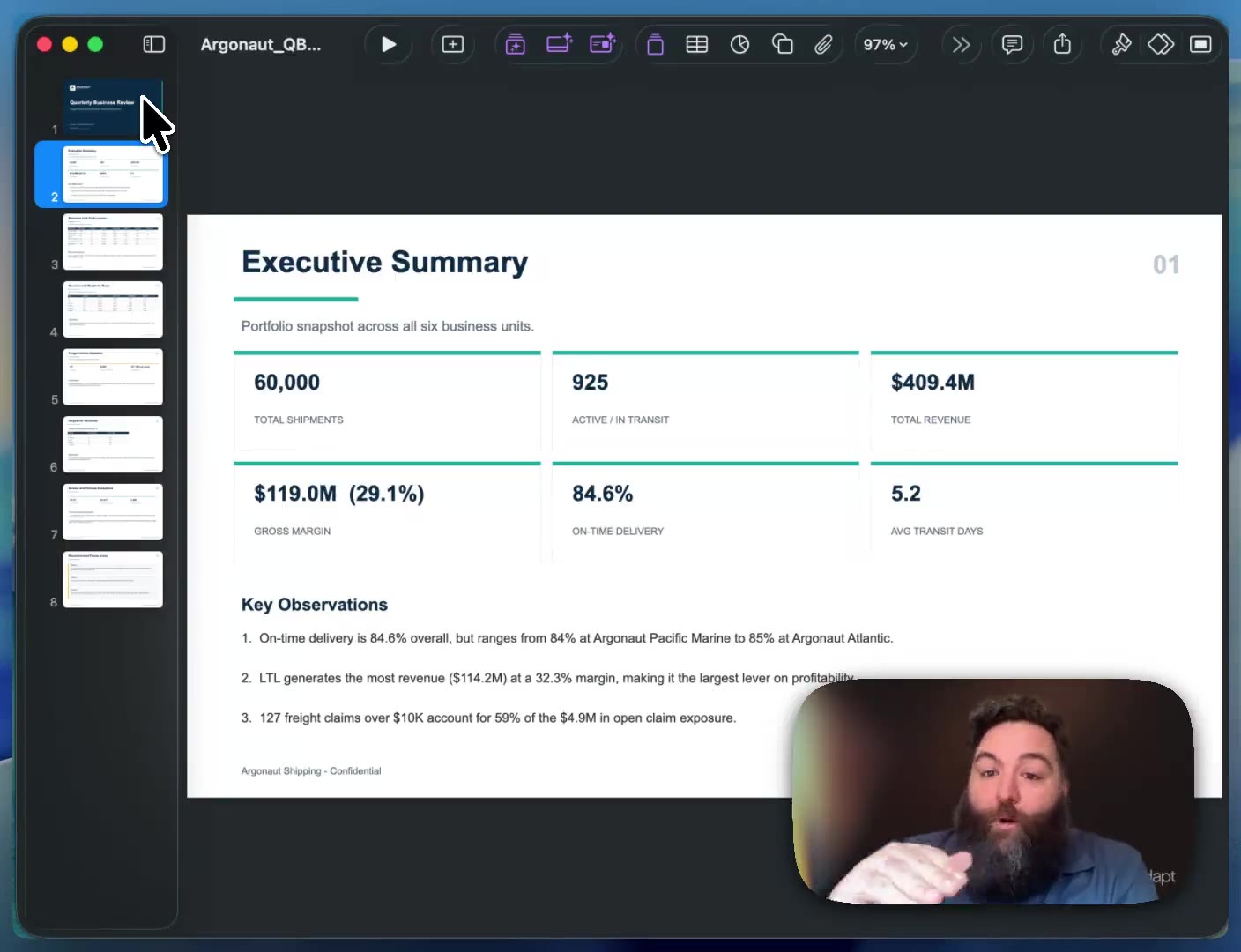
Upload one file and get a finished QBR deck back
No integrations, no setup, no connectors. Drag in a raw export, describe the deck you need, and get a filled quarterly business review built from your own numbers.
2:58
Marketing5 min read
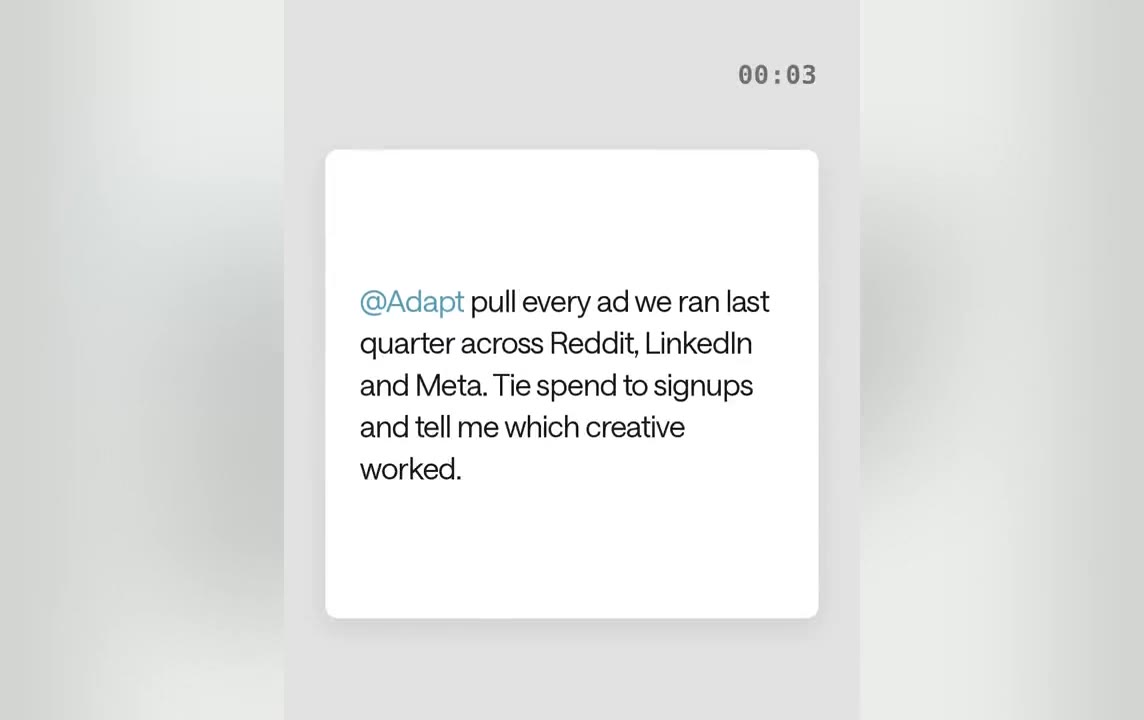
Go from ad idea to finished social video in one thread
A rough concept, a few rounds of feedback, and a rendered social video with real performance data in it. No brief, no agency, no handoff between five tools.
1:03
Leadership5 min read
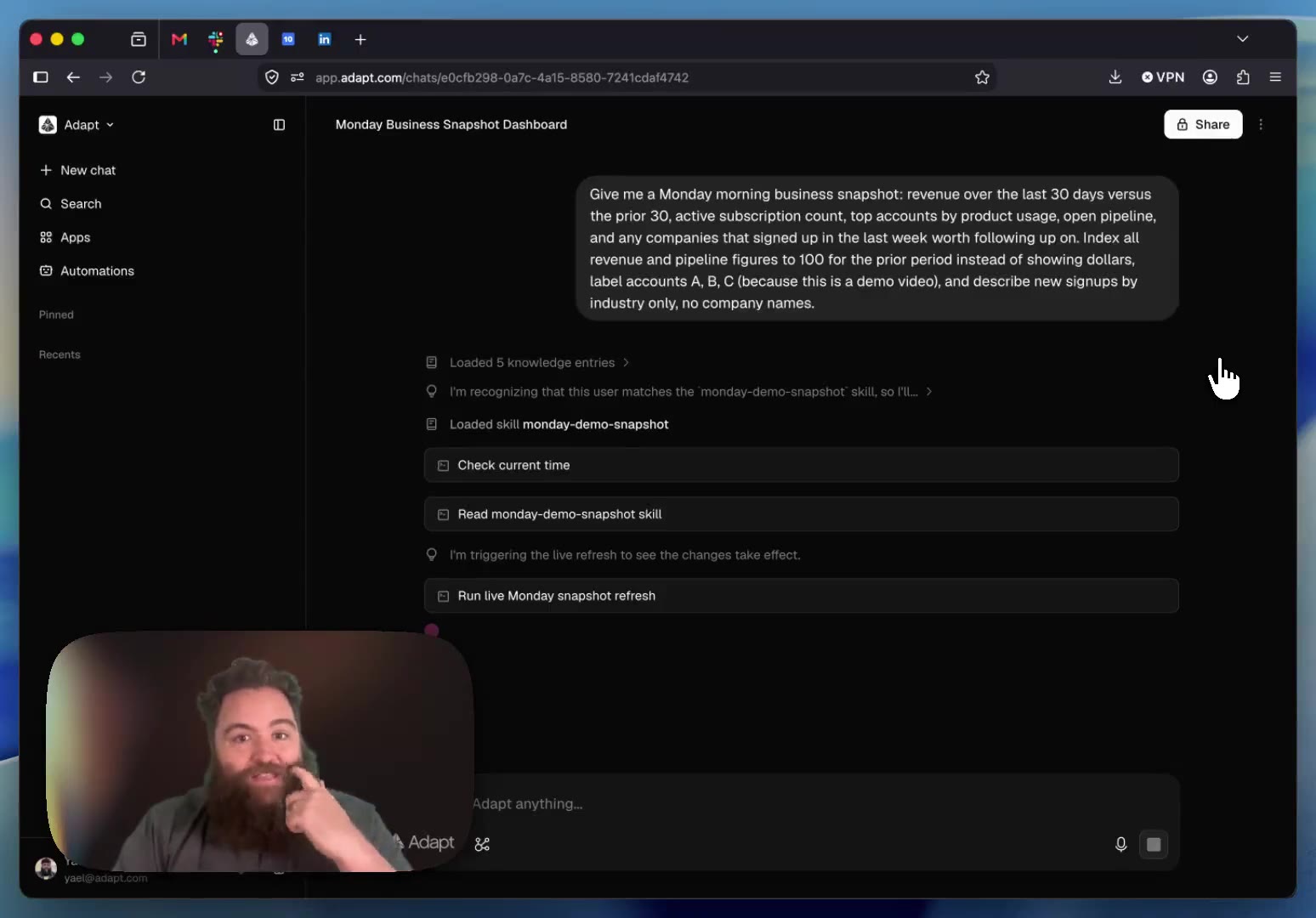
Get a Monday morning business snapshot in one prompt
Revenue, subscriptions, top accounts, open pipeline, and last week's signups. One question on Monday morning instead of five dashboards and a spreadsheet.

Make your company
instantly AI native.
Bring us a priority or workflow. We’ll show you how Adapt can put it to work across your company.