


A row of Adapt tabs used to read the same thing on every one of them. Now each tab names what's actually in it: the chat you're in, the app you're viewing, the automation you're editing, the settings page you're on. Keep as many tabs open as you want and find the right one without clicking through them.
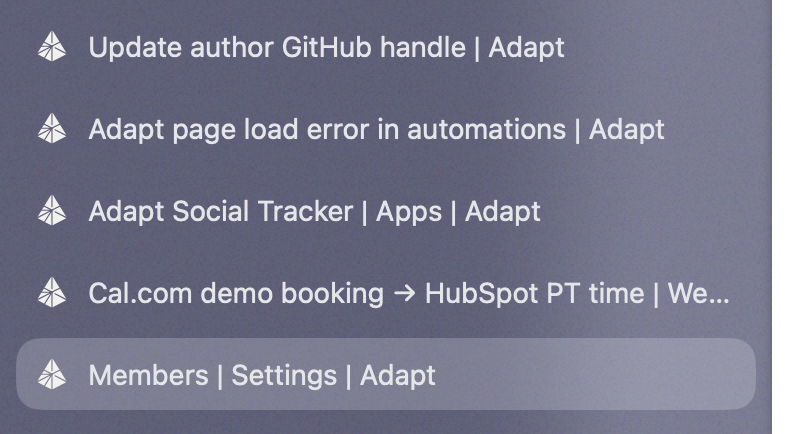
What the titles look like
Titles run most specific first, then the section, then Adapt:
| Page | Tab title |
|---|---|
| A chat | Q3 pipeline review | Adapt |
| An app | AcmeCorp Dashboard | Apps | Adapt |
| An automation | Daily digest | Automations | Adapt |
| A webhook | Deploy hook | Webhooks | Adapt |
| An integration | Slack | Integrations | Adapt |
| A group | Design | Groups | Adapt |
| A settings section | Members | Settings | Adapt |
Chats deliberately skip the section segment. When you're scanning a tab strip, the chat name is the part that identifies the tab, so it gets all the room.
How it works
The tab title updates live. When Adapt auto-titles a chat mid-run, or you rename one, the tab follows immediately. Pages that are still loading show their section name rather than flashing a generic default, and long names are truncated so a single runaway title can't swamp the tab strip.
Titles also carry into bookmarks, browser history, and window switchers, so a saved Adapt link says what it points at.