
Product Engineer
Product
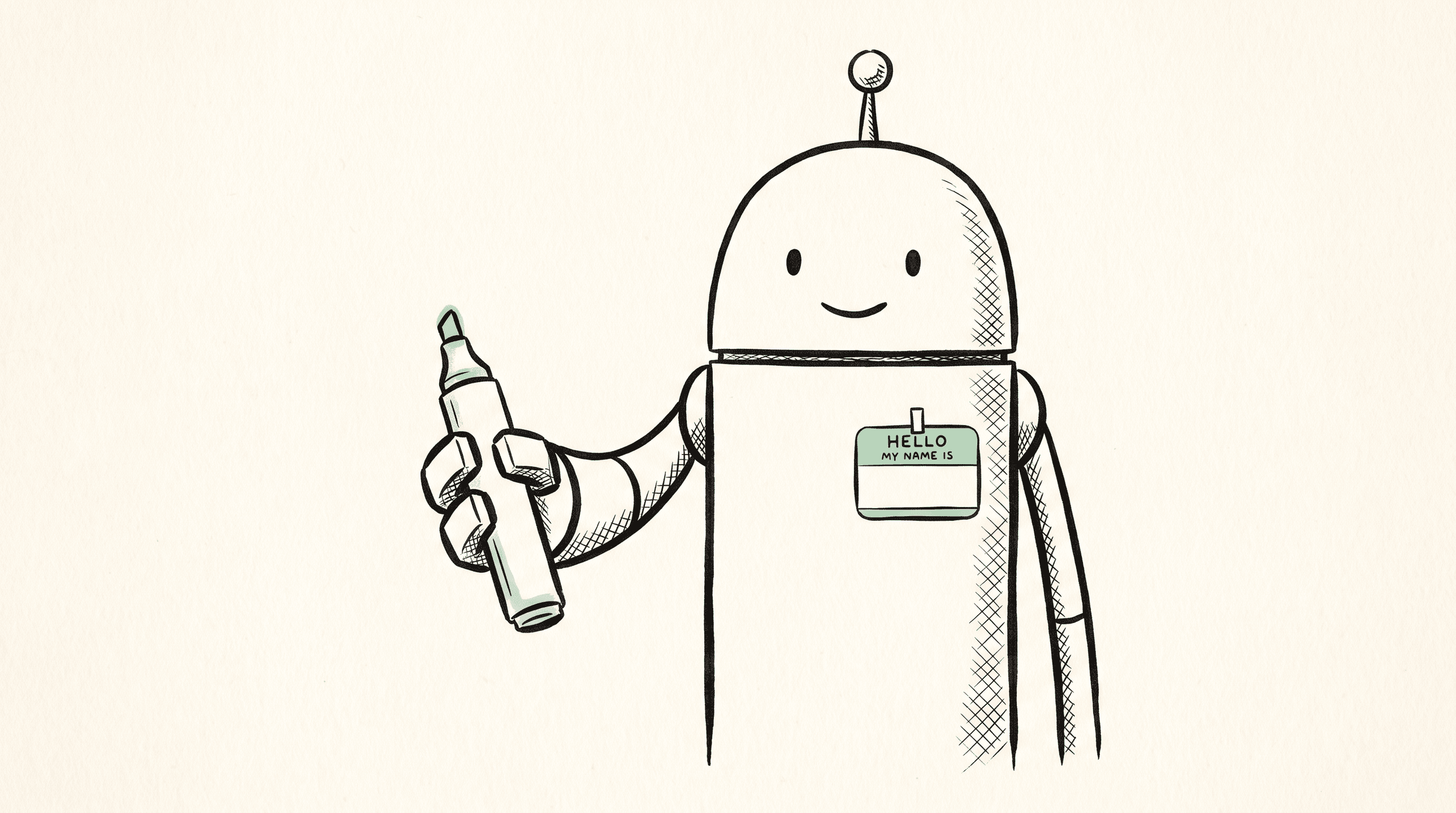
Their Name, Not Ours

Their Name, Not Ours
People just want the best of the best, right? Models, harnesses, all of it. I thought that too until customers started asking for ownership, specifically naming rights.
That's not your agent, that's their agent.
Casey Manos, another engineer here at Adapt, just shipped something really cool. Customers can run Adapt in their Slack under their own app now. Their name, their avatar, their credentials. Instead of @Adapt, they type @Acme, or whatever they call the thing. The plumbing was fiddly, Slack hands you an app id and a signing secret and you have to route webhooks by workspace plus app, store per-customer credentials, make sure one org's app can never answer for another. But the plumbing isn't the interesting part.
Ownership is king
The interesting part is why customers asked for it. They didn't want branding polish. They wanted the agent to be theirs. There's a real difference between "we installed Adapt" and "this is Acme, our agent." This goes from vendor relationship to ownership and attachment. And once you see that, you start seeing the same want everywhere. Why do people want to personalize and own their agents? Well, from what I've seen, four reasons.
-
You teach it, you own it. Every correction, every "no, do it this way," every skill you add builds on the last. If that lives inside a vendor's product under a vendor's name, you're renting your own teaching back.
-
The name matters more than anyone admits. People talk to the agent like a coworker when it's called what they decided to call it.
@Adaptis our name in their workspace. Their name signifies real membership. -
The credentials are a line in the sand. Their app, their keys, their workspace. If they leave us tomorrow, the app is still sitting in their admin panel, because it was always theirs. Casey even wired the storage so our platform credentials can't quietly take over if theirs break. Fail loud, never borrow.
-
Leaving the platform shouldn't mean leaving the identity. If the agent is yours, switching what's underneath doesn't take your name, your history, your teaching with it. The exit door being unlocked is what makes people actually commit.
This path might be the path of more resistance - the customer makes a Slack app, pastes in credentials, and we manage the credential lifecycle from there. Easier for us to say "just use @Adapt, it's the same thing." But it isn't the same thing, and they knew it before we did.
See a branded agent in action
Get a demo to see how Adapt can become a branded agent for your team.
You might also like
Product
Your Slack agent should look like it belongs to your company
A branded Slack agent is not a white-label chatbot. It is a teammate with your company’s identity, context, rules, and ability to do the work.
Work AI
Build Wide, Ship Narrow
Splitting a finished branch into small PRs used to be the expensive part, so we decided the boundaries before the code existed. That cost collapsed. Now the code can tell you where to cut it.
Product
Efficiencymaxxing: optimizing the AI intelligence-to-cost curve
I cut my average cost per Adapt turn by 83% with negligible quality loss by matching the model and effort level to the work in front of me.

Make your company
instantly AI native.
Bring us a priority or workflow. We’ll show you how Adapt can put it to work across your company.